The Regional Cooperative Program for the Technological Development and Modernization of Coffee Production (PROMECAFE) is a research and cooperation network originally formed by the coffee institutions of El Salvador, Nicaragua, Honduras, Costa Rica, Panama, the Dominican Republic, and Jamaica, together with the Inter-American Institute for Cooperation on Agriculture (IICA) and the Tropical Agricultural Research and Higher Education Center (CATIE).
Its establishment was approved in 1978 with the purpose of improving and developing technologies applied to coffee production in Mesoamerica, primarily to address the coffee berry borer and coffee leaf rust—problems that had never before been encountered in the region’s coffee sector and for which the countries were not prepared.
The Program’s implementation was led by the Central American countries, Mexico, Panama, and the Dominican Republic, together with the Inter-American Institute for Cooperation on Agriculture (IICA), with the participation of the Tropical Agricultural Research and Higher Education Center (CATIE) and the International Regional Organization for Plant and Animal Health (OIRSA). These institutions signed an operating agreement that made possible the technical and financial support of several international organizations, including the Brazilian Coffee Institute (IBC); the Coffee and Cocoa Research Institute (IRCC), later incorporated into CIRAD of France, which has continued its support since 1980; the European Economic Community (EEC); Portugal’s Coffee Rust Research Center (CIFC); the Federal University of Viçosa and the University of Campinas in Brazil; and the United States Agency for International Development’s Regional Office for Central America and Panama (USAID-ROCAP).
The Program operates through contributions from its member countries and IICA, complemented by the specialized cooperation of CATIE and CIRAD, as well as funding from international financial organizations for specific projects.
The Program has achieved significant results, developing a comprehensive body of technological knowledge that has not only provided solutions to plant health challenges but has also extended into other areas of coffee production. These achievements have strengthened horizontal cooperation and collaboration among the member countries, while also fostering a greater sense of ownership and commitment to the Program.
This recognition and appreciation have ensured the Program’s continuity. As a result, the original agreement between the participating countries, IICA, and CATIE has been renewed for consecutive periods and remains in force to this day.
To promote the modernization, genetic improvement, and sustainable development of coffee production in the Program’s member countries through technical and scientific cooperation in sustainable coffee cultivation, processing, post-harvest management, marketing, and environmental protection within the coffee industry.
To foster a competitive and sustainable coffee sector in areas related to agribusiness development, coffee quality, technological innovation, and equitable income distribution, thereby contributing to the reduction of rural poverty, the conservation of natural resources, and improved environmental quality throughout all the Program’s member countries.
From its establishment to the present day, PROMECAFE has contributed to improving and modernizing coffee production in these countries by bringing together regional efforts through cooperative and participatory work, as well as by carrying out coordinated actions within strategic partnerships and initiatives.
It is both fair and appropriate to recognize the significant value of international cooperation, whose technological, financial, and material contributions have made it possible to sustain the Program and achieve important results. CATIE and IICA, as founding partners, have likewise maintained continuous cooperation, further strengthening their commitment to and sense of ownership of the Program.
This recognition and appreciation have ensured continuity. As a result, the original agreement between the participating countries, IICA, and CATIE has been renewed for consecutive periods and remains in force to this day.
PROMECAFE operates through contributions from its member countries, IICA, and international cooperation partners.
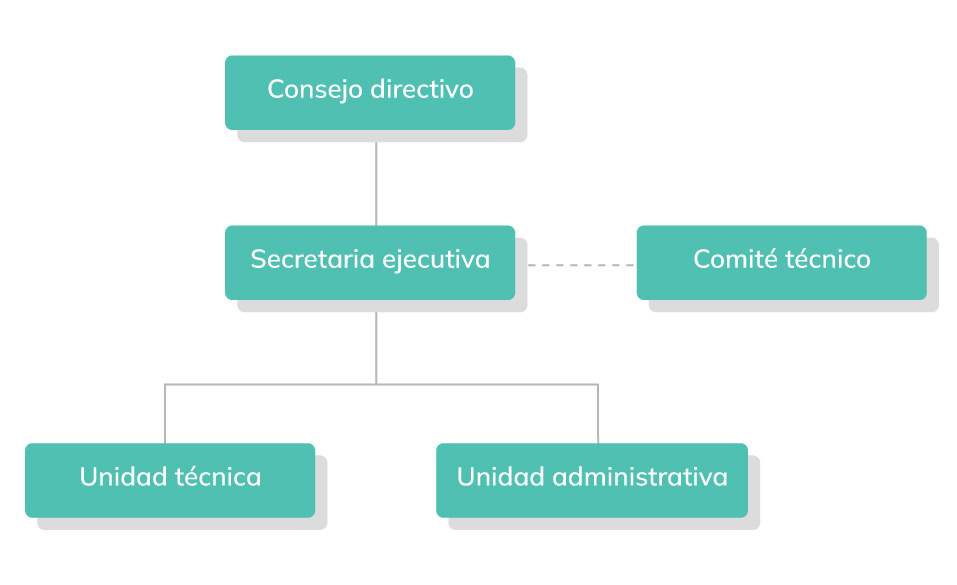
The Program has eight member institutions:
Mexico: National Institute for Forestry, Agricultural and Livestock Research – INIFAP
El Salvador: Salvadoran Coffee Institute – ISC
Honduras: Honduran Coffee Institute – IHCAFE
Nicaragua: Ministry of Agriculture and Livestock – MAG
Costa Rica: Coffee Institute of Costa Rica – ICAFE
Panama: Institute of Agricultural Innovation of Panama – IDIAP
Jamaica: Jamaica Agricultural Commodities Regulatory Authority – JACRA
Dominican Republic: Dominican Coffee Institute – INDOCAFE
In response to the technological needs identified by the region’s coffee institutions, recent initiatives have generated significant technological contributions in the following areas:
Biological control of the coffee berry borer through the rearing and release of three parasitoid species of African origin.
Coffee berry borer trap prototypes were refined for use by coffee growers, and the most effective chemical attractants for capturing the insect were identified. This work led to the development of a commercial model, Brocap®, as well as several low-cost artisanal models. These traps have proven effective as part of integrated pest management strategies, contributing to environmental protection and reducing the costs associated with controlling this pest.
Significant progress has also been made in the development and dissemination of new coffee cultivars and varieties for the region, including:
The development of hybrid Arabica families by crossing wild Ethiopian coffee types with commercial varieties and Catimor lines. Among these, 19 first-generation hybrids (F1) stand out as candidates for new varieties with high yields, strong vigor, and cup quality equal to or better than the Arabica varieties currently grown in the region.
The development of F1 hybrids derived from male-sterile plants, opening the possibility of reproducing selected types from seed without relying on highly specialized procedures such as somatic embryogenesis.
The development and distribution of Nemaya, a Robusta coffee variety created by PROMECAFE for use as a nematode-resistant rootstock. Nemaya seed propagation plots have been established in Guatemala and El Salvador, where nematode attacks on coffee crops are particularly severe.
Laboratory work using molecular and enzymatic methods to characterize the nematode species that affect coffee crops in Central America and to select genetic material resistant to these parasites, in cooperation with France’s Research Institute for Development (IRD).
Through PROMECAFE’s horizontal reciprocal cooperation mechanism, specific needs of the Program’s member institutions are addressed with support from French scientific cooperation.
PROMECAFE promoted the establishment of the PROMECAFE Coffee Tasters Network. Its training activities have played a pioneering role in the technical and professional development of this important group within the coffee sector, particularly in promoting higher quality, greater competitiveness, and access to specialty coffee markets for the region’s producers.
Training activities are conducted for technical personnel and technology-transfer professionals who work with coffee producers. Topics include organic coffee production, agroforestry systems, coffee processing, international coffee trade, and coffee safety as a quality factor. This includes the application of hygiene principles to food production and the control of critical points to prevent contamination, particularly by ochratoxins. For this purpose, an alliance was established with a specialized program of the Food and Agriculture Organization of the United Nations in Rome.
PROMECAFE has also participated in regional studies conducted with CATIE, the European Union, and Central American universities on the environmental effects, land use, productivity, and conservation of natural resources associated with the coffee-based agroforestry systems prevalent throughout the region. These studies have helped establish a technological foundation and guide public policies aimed at ensuring the sustainability of these systems and maximizing their environmental and social benefits.
The following regional projects have been prepared and approved by the Board of Directors: